


DIS Blog
What it’s really like to study in Greenland for a month
Camille is in the inaugural Arctic Experiential Studies cohort this Summer 2026. Spending two weeks in Copenhagen and four weeks in Greenland, the group is studying Greenland from multiple perspectives: climate change, ecopsychology, and global security.
After four weeks in Greenland and two weeks in Copenhagen, Camille looks back on her full experience.
Planning is different.
As someone with a spreadsheet, to-do list, and schedule for every class I take, being part of the first Arctic Experiential Studies cohort was a crash course in being okay with the unknown. After getting the acceptance email, I scoured the DIS website for a hint of what the most important six weeks of my summer might entail, but all I had was a bullet-point list of what potential activities could include.
We had two pre-departure Zoom meetings where we covered logistics and learned each other’s names, and I left those meetings feeling excited but with even more questions. Even when we finally got access to the course calendar, it came with the disclaimer that every activity was subject to change in case of weather.
About the blogger
Hello, hej, aluu, I’m Camille! I’m taking the Geopolitical Rivalries and Global Security course as part of the Arctic Experiential Studies cohort. At my home school, Wheaton College (Massachusetts), I’m double majoring in International Relations and Creative Writing.
I write about how my perception of myself and my world changes during my time abroad. Keep reading for reflections on my time in Greenland.


My first lesson in Greenlandic culture occurred before I got there, and it was through that disclaimer on the course syllabus. Aside from packing lists and potential activities, it’s hard to make definite plans in Greenland. Because of how variable and harsh the climate can be, my professor later explained, there exists what is culturally known as “Greenlandic time”. Plans are not usually made in advance. An activity is agreed upon and done immediately or whenever the weather is clear.
While it was uncomfortable to go into a month-long study abroad blind, it has given me more peace looking towards the future. Because of how well this worked out, I’m not worried about having no idea what the next few years of my life will look like.
Time is different
Greenland’s location in the Arctic Circle messes with your perception of time. I did not see a dark sky for a month. If I didn’t have my phone on me, I would have only been able to gauge time by the amount of fog, which tended to roll in late at night, then back out in the early afternoon.


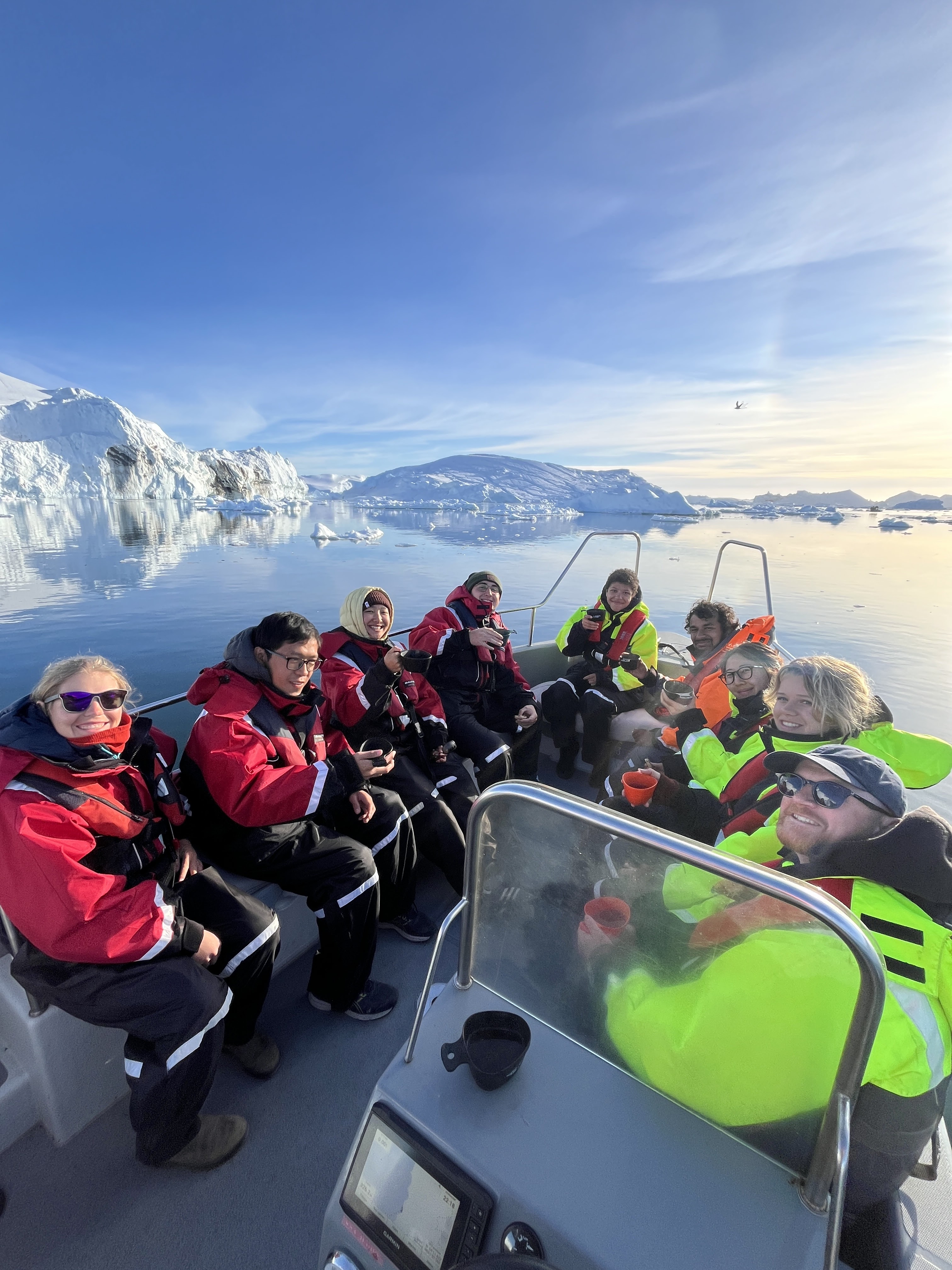
Time moved quickly. We spent ten days each in three different Greenlandic settlements, and each time we moved, I felt it had only been a couple of days at most. Our classes tended to be frontloaded, with most of our activities scheduled for when we were in Nuuk, then our big assignments due when we were in Sisimiut and Ilulissat. We did readings surrounded by mountains, took field visits to local organizations, then stayed up late into the night under the midnight sun on assignments that gave us the opportunity to reflect on what we saw firsthand. This contributed to feeling like time was unbalanced.
The warping of time is not specific to Greenland. My study abroad experience last fall shared the feeling of moving extremely fast. When everything is new and you are always busy, every day tends to be a blur. But when it’s always bright out, your circadian rhythm starts working against you. Even my sleep began following “Greenland time”: whenever I had the opportunity instead of regular and planned.


Relationships are different
Greenlandic settlements are very small, and historically, strong relationships were needed for survival. Disputes are traditionally settled through restorative justice to keep the community tight-knit. I fully expected to be met with indifference or hostility from Greenlanders. I would not have blamed them if that was the reaction I, an American, received. Instead, every Greenlander I spoke to greeted me with respect. The actions of my country were not held against me.
On Greenland National Day, we attended a church service. The man sitting next to me elbowed me, catching my attention. He angled his book towards me. I read the Greenlandic hymn over his shoulder, guessing the melody and pronunciations. He smiled, giving me a thumbs-up. When the service ended, we talked. I told him I was American, and he complimented our soccer team’s performance in the World Cup. As a tourist, I was still welcomed into the community. New faces are a source of curiosity, not animosity.


It’s funny for me to look back on the ten days my classmates and I spent in Copenhagen before heading to Greenland. Even though we spent most of the day in class together, the turning point in our communal relationship didn’t happen until we were in Greenland. When you spend a month eating breakfast together every morning, going to field visits together all day, cooking dinner together, and sleeping next to each other, you get extremely close extremely fast. Limited WiFi, sleep, and hot water could have shortened our nerves, but the Greenlandic principle of being quick to forgive made more sense throughout the month.
The twenty of us relied on each other. It feels hard to believe I only knew my classmates for six weeks. Some of them know me better than people I’ve known for years.
“It feels hard to believe I only knew my classmates for six weeks. Some of them know me better than people I’ve known for years.”


Comfort is different
Now that the program has ended, I enjoy reminiscing about all the things I did that were out of my comfort zone. You grow the most when you’re uncomfortable, but Greenland pushed me harder than anywhere I’ve gone. I tried food like narwhal blubber (hated it) and whale skin (pretty good). I kayaked through an ice fjord and was almost capsized when I thought I was stronger than the ice in my way. We cooked outside, slept on lichen, and took a 22-hour ferry. One of my friends caught a venomous fish.
If you’re not in shape, you will get in shape. Not one of our stays had an easy walk to a grocery store. In Nuuk, a huge hill lay between us and the city. The first time I climbed that hill with a bag full of groceries, I had to stop multiple times to catch my breath. The last time was a breeze. On the first hikes we took, one friend and I were consistently at the very back of the group, winded, sweating, and struggling to keep up. On the last hike, we were at the front.
By no means do you need to be the most easy-going, deep-sleeping, in-shape person to participate in the Arctic Experiential Studies program. But you do need to be okay with being uncomfortable. You will grow the way the program requires you to, and come out the other end more resilient.

Your perspective is different
When we first stepped off the plane in Greenland, the only thing I could hear was the collective “Oh my god” from all my classmates. The Greenlandic landscape is truly unlike anywhere I’ve ever been: Rocky, vast, blanketed by snow and lichen. Harsh and unforgiving, but truly the most beautiful place I’ve seen. A friend who lived in Svalbard told us about the “Arctic smile”, or the way everyone first arriving in the Arctic beams in awe.
My experience in Greenland was different from my expectations in almost every way. The idea of camping overnight without plumbing was outside of my comfort zone, but my favorite memories from Greenland were on those camping trips. The weather was a big concern of mine, but not one person complained when we spent an hour outside in the freezing rain playing with puppies. I looked forward to the fancy restaurants we might eat at, but the best dinner I had was a medieval-inspired community dinner my classmates spent hours cooking for the rest of us. I spent a lot of time worried about not fitting in, just to be heartbroken when the program ended and my friends and I all went our separate ways.
As much as it hurts for such a wonderful experience to be over, I’ll carry my memories, my friends from all over the country, and my appreciation for the unexpected with me everywhere.
When we landed back in Copenhagen after our month in Greenland, my friends and I talked about how you can’t go to the Arctic without it changing you. Greenland dwarfs you with its mountains and icebergs. It humbles you with your fallibility. It shows you the grit humanity has needed to survive. My relationship with nature and food is completely different. I’m so grateful to have been able to let the Arctic change me.
This is especially true as part of a fully funded program. I will never forget sitting on a bus leaving the airport in Nuuk, looking at the towering rocks, listening to my friends talk about how good we must have been in a past life to earn this, and thinking, I earned this. My professors reviewed my application and thought I deserved to see this. I have never felt more grateful for an opportunity in my life. I am so grateful to DIS, the Green Education Fund, to all the DIS professors who made this possible, and everyone I got to know through this program. I am beyond excited to keep watching the development of the Arctic Experiential Studies program and how it changes the lives of everyone it touches.

