About this course

Mass killings have occurred at all times in history. The twentieth century, however, stands out in intensity, frequency, and the means applied to kill great numbers of innocent people.

This course focuses on the Second World War. The primary focus is the Holocaust, but it also investigates the many other genocides that took place simultaneously during the six years of warfare in Europe. 

Through lectures, case studies, and visits to the locations of historic atrocities, we investigate the causes of genocide and the sociological and psychological mechanisms that turn people into perpetrators, bystanders, rescuers, and victims. We examine how the Nazi regime targeted a wide range of victim groups through persecution, deportation, and mass murder, with Auschwitz as a central case study, using survivor accounts to understand the camp through the experience of one person.

Syllabus

Course note

This course was originally called Holocaust and Genocide. Starting in Spring 2027, the course title will be Europe and the Holocaust.

Travel on Study Tour

You only take one Core Course per semester, and each Core Course includes two Study Tours: one Short Study Tour to a nearby destination for three days, and one Long Study Tour to another European country for six days.

Led by your faculty, Study Tours take you into real-world settings where you will apply what you’ve learned outside the classroom.

Students sitting on the floor in a modern building, engaging in a group activity with papers and notebooks scattered around.

Faculty

Christopher Sparshott

Ph.D. (Modern History, Northwestern University, 2007). MA (Modern History, Northwestern University, 2002). BA (Modern History, Oxford University, 2001). For two decades, I have taught courses in modern history at Northwestern University in the United States and Qatar in the Middle East. My teaching emphasises creative approaches to learning that builds bridges to the past. I am passionate about bringing history to life and introducing students to new places, people and ideas through innovative, student-focused pedagogy. Secretly, my goal is to turn all students into historians! In 2022 I joined DIS as a teaching and learning specialist in the Learning Lab and a faculty member in the European Humanities Department focusing on 20th Century Europe. Away from the classroom, I research and write about the American Revolution. I am fascinated by the minority of Americans who opposed independence and remained loyal to Britain. What motivated these doomed “loyalists” is at the centre of work. With DIS since 2022.

Long Study Tour

About this tour

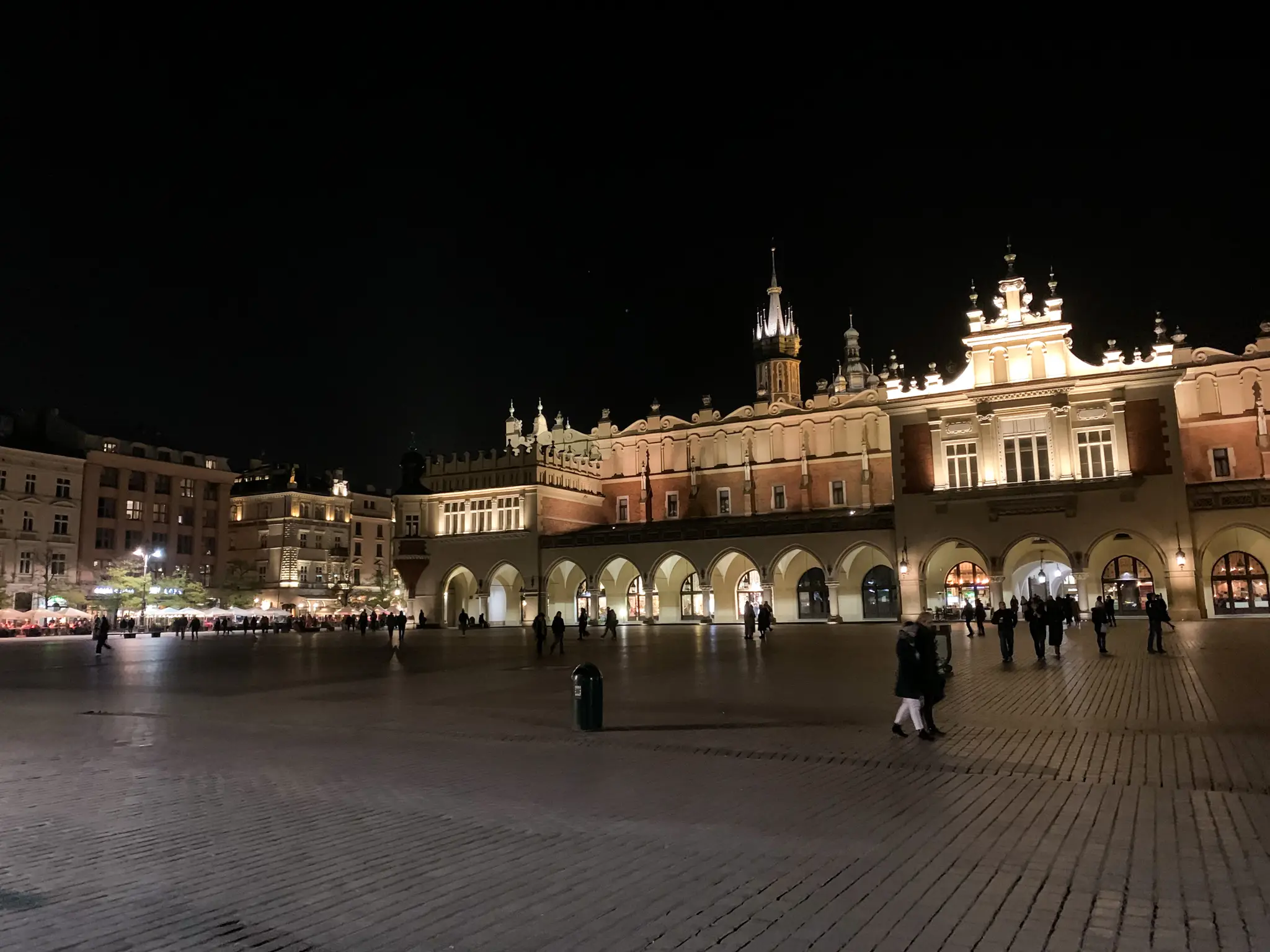
What can the experience of one city teach us about the evolution and unfolding of the Holocaust? On this Study Tour, we explore Krakow and its surroundings to trace how an ancient centre of Jewish life became central to the Nazi campaign of persecution and extermination.

Beginning in the narrow streets of Kazimierz, once home to one of Europe’s most vibrant Jewish communities, we follow the story as it crosses the river to Podgórze, where the ghetto confined tens of thousands behind walls whose tombstone-shaped fragments can still be seen today. At Schindler’s Factory and the site of the former camp at Płaszów, we encounter stories of survival, moral choice, and the machinery of occupation.

The journey culminates at Auschwitz-Birkenau, where the Holocaust reached its most systematic and devastating form, transforming ideology into industry and erasing whole communities in the process. Through these places, we ask core questions about how and why the Holocaust happened, and what people choose to remember and forget today.

Learning outcomes

  • Examine how the Holocaust became possible by tracing the transformation of Krakow from a vibrant center of Jewish life to a site of persecution, deportation, and destruction

  • Analyze first-hand the physical and moral landscape of the Holocaust through visits to ghettos, labor camps, and extermination sites, and reflect on how place shapes understanding
  • Interpret Auschwitz-Birkenau as both a historical site and a symbol, evaluating how its representation, explanation, and remembrance continue to shape moral and historical awareness
  • Integrate primary sources with physical evidence by situating survivor testimonies, documents, and artefacts within the geographical and historical contexts in which they originated

Possible activities

  • Explore Krakow’s historic Old Town on a guided walking tour to understand the city’s layered past and its role during the German occupation

  • Visit Kazimierz, the former Jewish Quarter, to discover the synagogues, cemeteries, and cultural landmarks that once formed one of Europe’s most vibrant Jewish communities
  • Walk through Podgórze, the site of the wartime Jewish Ghetto, and learn how daily life changed under Nazi rule
  • Visit Schindler’s Factory, which functioned as a subcamp of the Płaszów concentration camp, producing materials for the German war effort
  • Go on a full-day visit to Auschwitz-Birkenau, tracing the transformation from concentration camp to extermination center and considering how ideology became industry
  • Visit the Galicia Jewish Museum in Krakow, which presents photographic and archival exhibitions on Jewish life in Galicia and the Holocaust, encouraging reflection on memory, identity, and survival

Short Study Tour

About this tour

Why did Denmark, almost alone in Europe, succeed in rescuing 99% of its Jewish population in October 1943? This remarkable fact stands at the center of Holocaust studies, raising one of the most enduring questions of the period: why Denmark, and nowhere else? Over the course of three days, we will walk the streets of Copenhagen and cross the strait to Malmö in search of answers. 

On the tour, we’ll explore the history of Jewish life in Denmark through its synagogues and a walking tour of Copenhagen, learning about the Jewish historic footprint and the two waves of Jewish immigration in the 17th and 19th centuries. We’ll head to the fishing village of Dragør to analyze how Denmark’s geography, civil society, and resistance networks made rescue possible, contrasting with other European countries. At the end of the tour we’ll go to Malmö, tracing the return of Danish and Norwegian concentration camp survivors in 1945.

By retracing these paths, we ask not only how Denmark made the impossible possible, but also what became of those who could not escape. 

Learning outcomes

  • Explain why Denmark, unlike other European countries, managed to rescue 99% of its Jewish population
  • Identify what happened to the 1% who were deported, using both individual stories and commemorative sites
  • Analyze how rescue, survival, and memory are presented in Copenhagen and Malmö today, connecting local history to European Holocaust narratives

Possible activities

  • Go on a guided visit to the Great Synagogue in Copenhagen
  • Visit the Danish Jewish Museum and Danish Resistance Museum
  • Visit Dragør, one of the coastal escape points used to ferry Jews across to Sweden
  • Participate in a Stumbling Stone walking tour in Copenhagen, highlighting victims who were not rescued and the fate of the 1%
  • Visit the White Bus exhibition at Malmö Castle, tracing the return of Danish and Norwegian concentration camp survivors in 1945