Humans have always been starbound. But what was once a distant realm of the sacred is now a place we can reach and travel. Space is a frontier, a market, a research laboratory, and a potential industrial zone full of opportunities and resources – satellites, data, minerals, power, planets – that are of great interest to not only national entities, but also commercial actors.
In this course, we unpack the history and future of this complex geopolitical development. We explore the new space technologies and the private actors that produce them, nations and the emerging battle over ‘digital sovereignty’ between them, as well as the tech-titans, whose commercial monopolies and grand civilizational ideas push much of the current space race forward. We will unpack the ideas, religions and mythologies that surround human perceptions of the universe and the not just legal, but profoundly ethical – even existential – choices that will surround human expansion beyond Earth in the future.
You only take one Core Course per semester, and each Core Course includes two Study Tours: one Short Study Tour to a nearby destination for three days, and one Long Study Tour to another European country for six days.
Led by your faculty, Study Tours take you into real-world settings where you will apply what you’ve learned outside the classroom.
LL.M Law, University of Copenhagen, 1995 & licensed Advokat. Member of the Council of Europe Network of Specialised Lawyers & NGOs providing legal assistance to victims of trafficking since 2016. Nominated Expert for GRETA, expert group under The Council of Europe Convention on Action against Trafficking in Human Beings, by Danish Ministry of Justice several times. Passion for space and astro politics, and the balance between commercialization, sustainability and exploration of space. Educated in space law, including at ALTI Vrije Universiteit Amsterdam. Works as General Counsel in FinTech. With DIS since 2025.
Long Study Tour
About this tour
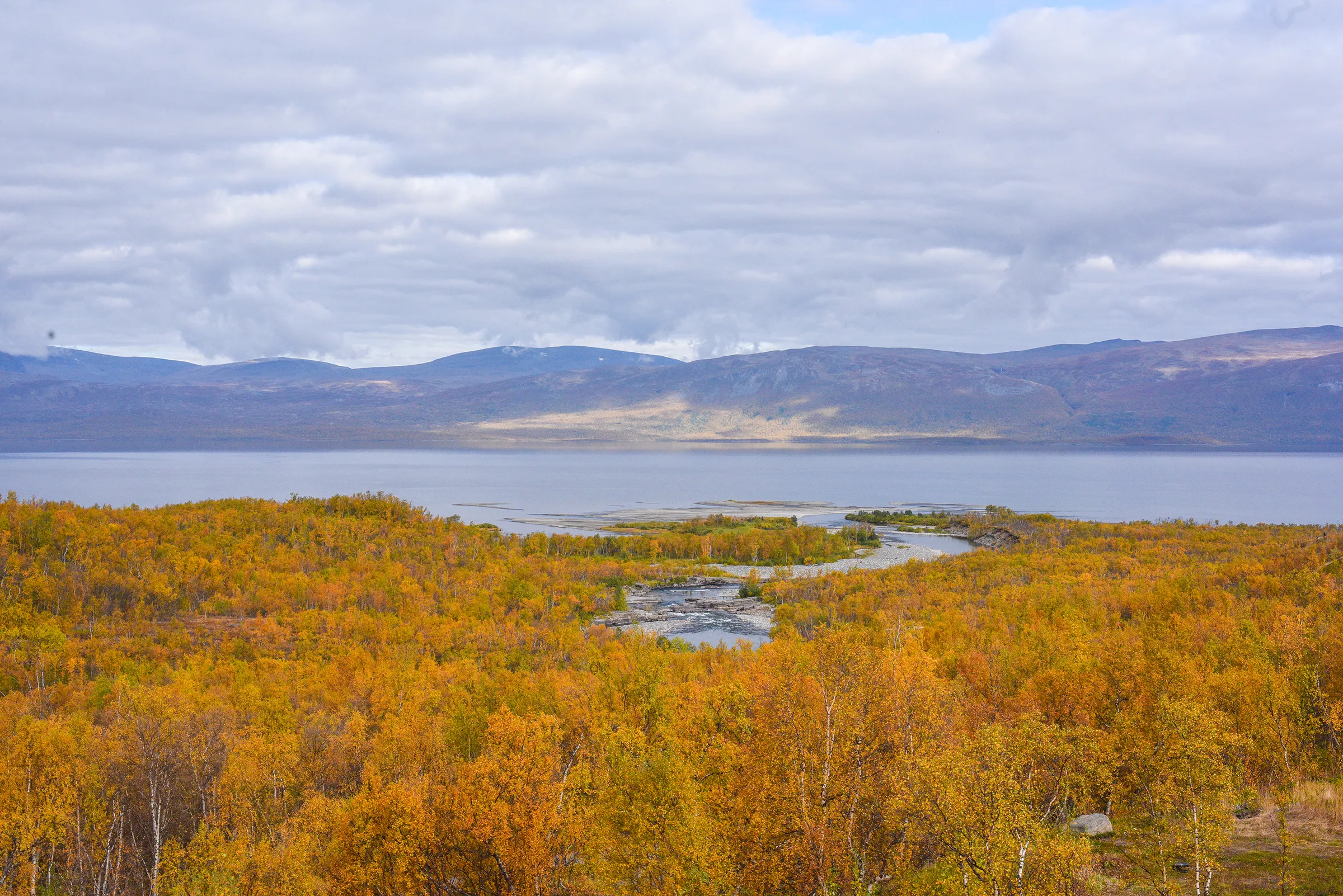
This week-long Study Tour, which goes first to Stockholm and then by night-train to Kiruna, Arctic Sweden, will provide students with a unique visit to Europe’s only inland space launch and test facility as well as a firsthand encounter with the stunning beauty and ancient mythologies of the Arctic Night Sky. It will also introduce students to cutting-edge space climate researchers, as well as to the local tensions and ecological implications of new technologies.
We will visit research labs and weather stations to get a handle on how satellites now play a vital part in climate modelling. We will hike in Abisko National Park, where nocturnal animals native to the tundra lives. We will learn of their importance to the Sámi, but also to the ecosystems around them, and of the disruption caused to their patterns of navigation by an increase in satellites and space light pollution. At the Ice Hotel, we will carve ice sculptures and look out for Northern Lights.
This Study Tour will be a once-in-a-lifetime cultural experience and a very special place to hike, learn, connect, reflect and socialize.
Learning outcomes
Understand the many forms of “extraction” occurring in Arctic Sweden – material, digital, symbolic
Gain a hands-on experience with how human activities impact the environment, biodiversity and social dynamics of modern Arctic Sweden
Obtain an understanding why the Arctic has become a desired arena for technological experimentation
Appreciate the role of ideas, worldviews, and mythologies in the development and critique of new technologies
Possible activities
Visit Stockholm’s Nobel Museum to unpack Sweden as a historic epicenter of science, extraction and technology
Visit the Arctic Exhibit at Nordiska Museet and explore its threats to Inuit and Sámi culture
Buy a book for our night train ride to Kiruna in Stockholms legendary Science Fiction Bokhandeln
Get a unique tour of the Kiruna’s Space Port Esrange
Get an underground tour of Kiruna’s LKAB Iron Ore Mine
Visit Sámi Indigenous villages and speak to Sámi environmental activists
Get a guided tour of the recent relocation of Kiruna
Watch Northern Lights and hike in Abisko National Park
Carve ice sculptures at the spectacular Ice Hotel
Short Study Tour
About this tour
This Short Study Tour goes to the one of Sweden’s oldest university towns as well the car-free island of Hven.
Our visit to Lund will provide us with an actual glimpse into the beautiful objects, instruments, and observatories of early astronomy and the ‘Old World’ of which infant astronomy was part. It also allows us to explore the futurist equipment and high-tech laboratories of twenty-first century space experimentation and Earth observation. Likewise, our two-day sleep-over on the Island of Hven will transport us to the age of Tycho Brahe and allow us to explore, socialize, and stargaze.
Learning outcomes
Obtain an overview of the history of astronomy and its role in the foundation of the modern sciences and university
Gain an understanding of Sweden and Denmark as epicenters in both the infant science of astronomy and contemporary, space-related fields of research: astrophysics, AI, quantum physics
Understand and critically reflect on the growing ties between national, scientific and commercial space actors
Socialize, stargaze – and maybe learn how to bike
Possible activities
Get a guided tour of Lund University (1668), the Old Lund Observatory and the world-famous Astronomical Clock (UNESCO HERITAGE)
Talk to cutting-edge researchers at the Lund University Astrogeobiology Laboratory, who study Earth from space to for a whole range of scientific purposes
Visit the modern Lund University Planetarium, which allows guests to visit stars, planets, galaxies and exo-planets under the guidance of an astronomer
Visit the old Tycho Brahe Observatory on Hven
Bike the car-free island, swim the sea and make our own pizzas based on a wheat particular to Hven
Looking for some advice? We’ll support you every step of the way.