


DIS Blog
The distance between home and belonging
As her time abroad comes to a close, Ani reflects on her final summer session in Copenhagen. She discusses what she learned in those three weeks; from educational policy in Scandinavia, to the importance of riding a bike and leaning into Danish directness, to what real friendships and community look like.
Experiencing Copenhagen was one of the best moments of my life; it was truly an honor to spend time in such a beautiful city with some of the most wonderful people.
It was truly an honor to spend time in such a beautiful city with some of the most wonderful people. I’m unable to put into words how grateful I am. My name is Ani Grigsby, and I attend the University of Denver, where I study Creative Writing and Poetry. I have always been attracted to the systems that shape people in our everyday life, like our classrooms, curriculum, and the architecture of a school day. That’s what brought me to DIS Copenhagen, and into a course that gave me a chance to ask big questions about small, everyday things.
The academics: Education Policy in Scandinavia
This term, I took Education Policy in Scandinavia, a course that went through how the Danish region builds and operates its schools and, in some ways, its citizens. Denmark has the largest population of children registered for schooling from ages 0-6 in the world, and it is considered almost like a social experiment in terms of innovative schooling. We talked about equity, funding, teacher autonomy, and the philosophy that education isn’t just about test scores but about raising whole, well-adjusted people. During our class, we were able to venture a few hours south of Copenhagen to a nature kindergarten, a school where the classroom was mostly trees, mud, and open sky. Watching kids of all ages co-mingle, problem-solve outdoors, climb, cook, get dirty, and figure things out without an adult hovering over every decision made the policy readings feel real. It’s one thing to learn about child-centered learning and embracing risk in early education; it’s another to stand in a forest and watch a five-year-old confidently navigate their friendships and relationship with the natural world.

About the blogger
I’m Ani, and I study Creative Writing and Poetry at the University of Denver. While abroad, I took Curating Today in Stockholm and Education Policy in Scandinavia in Copenhagen, getting the chance to learn in two incredible cities while experiencing life beyond the classroom.
My blogs are reflections on what it’s like to immerse yourself in a new culture, live somewhere completely new, and find inspiration in unfamiliar places. Outside of exploring, you can usually find me reading, writing, getting outdoors, or knitting. Follow along for stories, discoveries, and a little bit of Scandinavian adventure!


Getting around
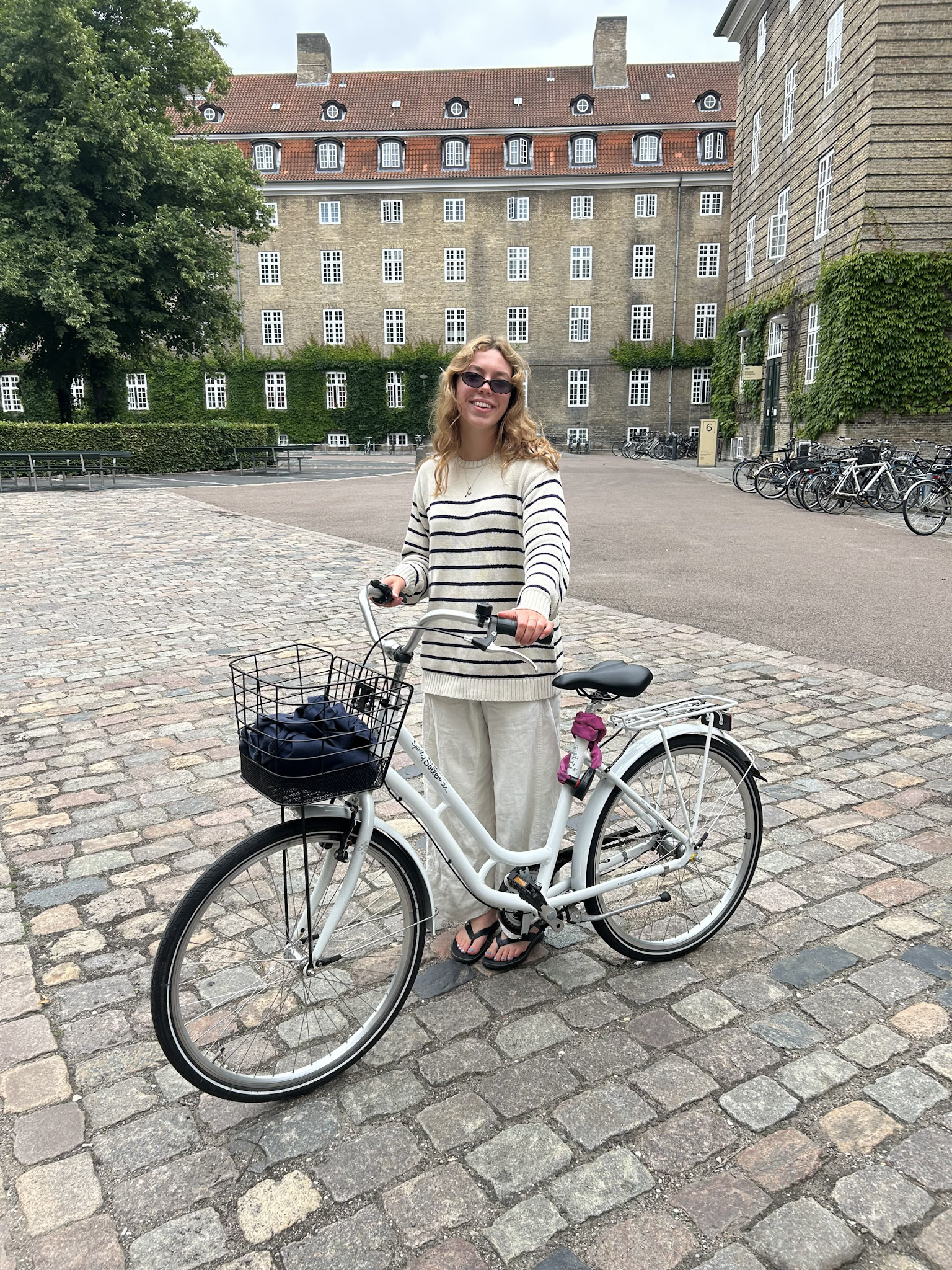
In Copenhagen, biking isn’t a novelty, but it is the norm. There are more bikes than residents, and it is the fastest way anywhere, over trains and buses, and the thing everyone from students to business people to parents with three kids strapped into a cargo bike does without a second thought. Learning to bike everywhere meant learning a whole new language of the road. In Denmark, they have different hand signals, rights of way, merging into a bike lane at rush hour, etc. At first it was
overwhelming, but it became a routine, the way I woke up, moved through the city, and even thought through problems. Biking as a group with my friends is one of the simplest pleasures of life, and everyone should get outside more and connect with cities in a more tangible way. There’s something about being forced to physically traverse a place, rather than pass through it, that makes it stick with you differently.
Interacting
Danes don’t dance around what they mean, and it took me a while to stop mistaking directness for coldness. When I was in Sweden, people were much quieter and more humble when interacting, but here, there’s no small talk cushion, no over-apologizing, no softening every request into a question. Over time I started to see it as its own kind of respect: that the Danes I had connected with trusted me enough to tell me the truth, and trusted themselves enough not to need it dressed up.
What was actually hard
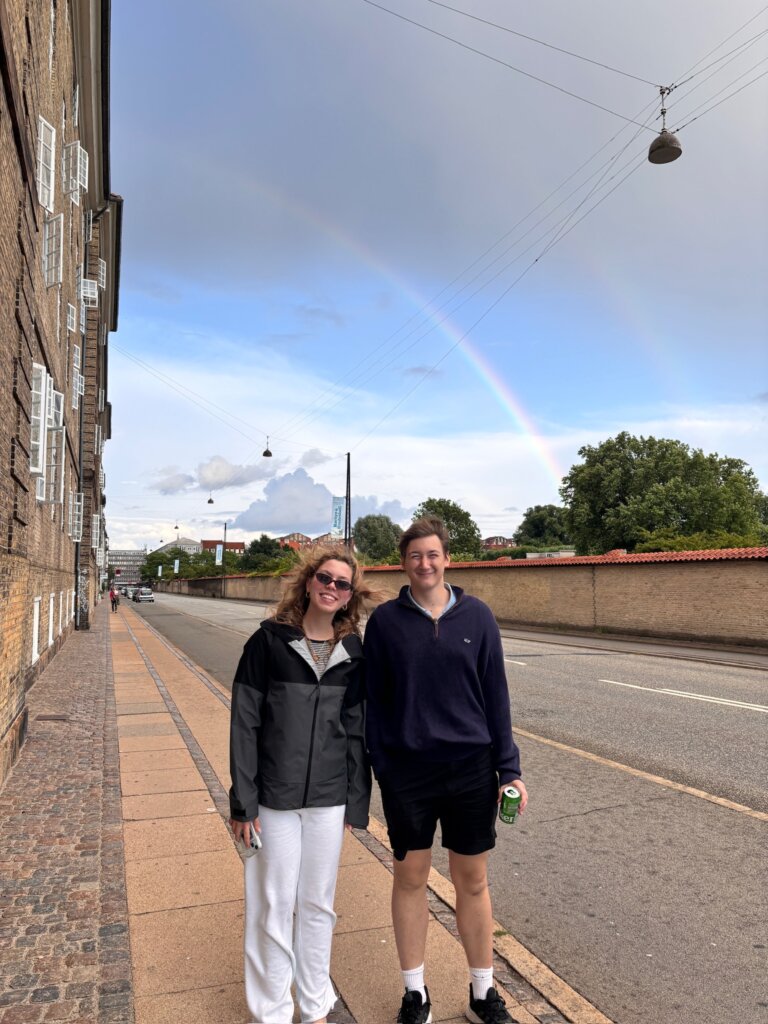
Something I didn’t plan for was getting sick, really sick, in the middle of the term. I was far from home, in a city where I still didn’t fully know how the pharmacy and over-the-counter medication worked, and for a few days I felt more alone and FOMO than I had the entire trip. But that’s also when I found the best group of friends I’ve ever had. They showed up. Not in a dramatic way, but in the small, consistent ways that end up mattering more: making me laugh when I felt miserable, dragging me out for a swim the second I had enough energy, showing up with my favorite ice cream like it was the obvious thing to do. I didn’t expect getting sick to be the thing that showed me who my people were, but it did. Being taken care of, being let in on someone else’s ordinary kindness, taught me more about community than any healthy day abroad could have.

If you’re considering this course (or this kind of trip)
A few things I wish I’d known going in:
● Get a bike, and get comfortable with it fast. It’s not just transportation here; it’s how you actually learn the city.
● Don’t mistake directness for unkindness. Give yourself time to hear it for what it is.
● Let people take care of you. It’s tempting to push through and stay independent; however, the moments where you need help are often where the real friendships form.