


DIS Blog
Finding my people: A term of curating and community in Stockholm
After a summer session in Stockholm, Ani reflects on who she was upon her arrival, and who she is leaving as. She discusses the important lessons studying abroad taught her; leaning into discomfort, cultural insights, travelling with a big group, and building community.
I came to Stockholm expecting to learn about art.
I didn’t expect to learn so much about community, how to build it, how to travel with it, and how to sit quietly inside it.
Who I am, going in
My name is Ani Grigsby, and I attend the University of Denver, where I study Creative Writing and Poetry. Along with literature and the written word, I’ve always been drawn to spaces where art and people meet, not just the work on the wall, but why it’s there, who chose it, and who it’s for. That curiosity is what brought me to DIS Stockholm and into a course that felt made for the questions I didn’t yet know I had.
The academics: Curating Today
This term, I took Curating Today: Artists, Exhibitions, and Audiences, a course that gave me a new perspective on the extensive work that goes into art curation, as well as the social and political implications and effects that art and its presentation can have on culture. We didn’t just look at finished exhibitions; we talked about the decisions behind them, like how a curator thinks about pacing a viewer through a room and how audiences shape (and are shaped by) the work they encounter. The highlight of the course was a week-long study tour to Venice for the Venice Biennale, the Prada Foundation, and many more. Walking through the Arsenale, seeing dozens of countries’ pavilions in conversation with each other, made the theory we’d been discussing in class suddenly feel alive and tangible, much more than I had ever felt looking at art at home or without the background I had gained from the class. It’s one thing to read about curatorial intent; it’s another to stand in a space built entirely around it and feel yourself being immersed in art that spans generations.

About the blogger
I’m Ani, and I study Creative Writing and Poetry at the University of Denver. While abroad, I took Curating Today in Stockholm and Education Policy in Scandinavia in Copenhagen, getting the chance to learn in two incredible cities while experiencing life beyond the classroom.
My blogs are reflections on what it’s like to immerse yourself in a new culture, live somewhere completely new, and find inspiration in unfamiliar places. Outside of exploring, you can usually find me reading, writing, getting outdoors, or knitting. Follow along for stories, discoveries, and a little bit of Scandinavian adventure!


Getting out of my comfort zone
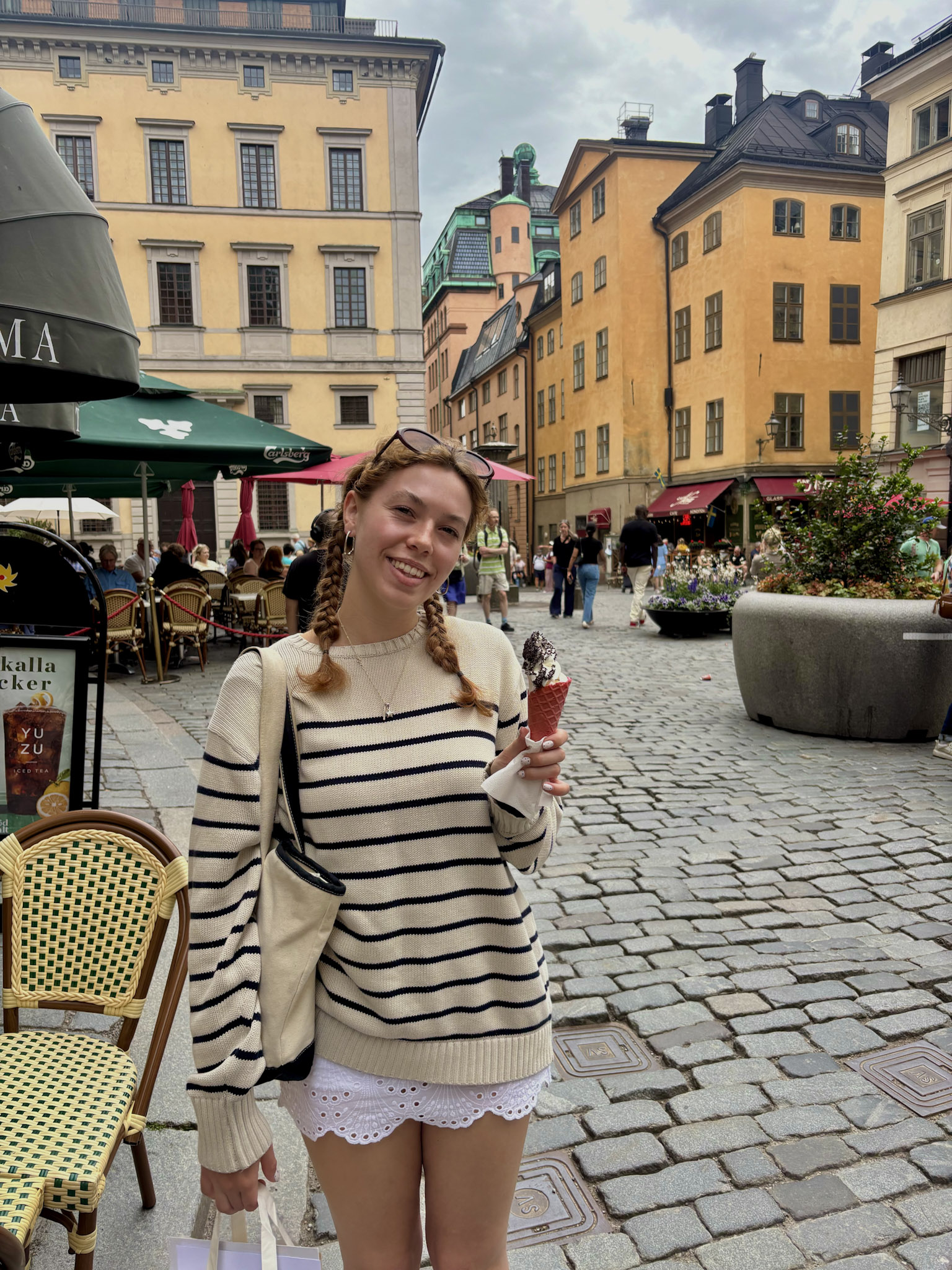
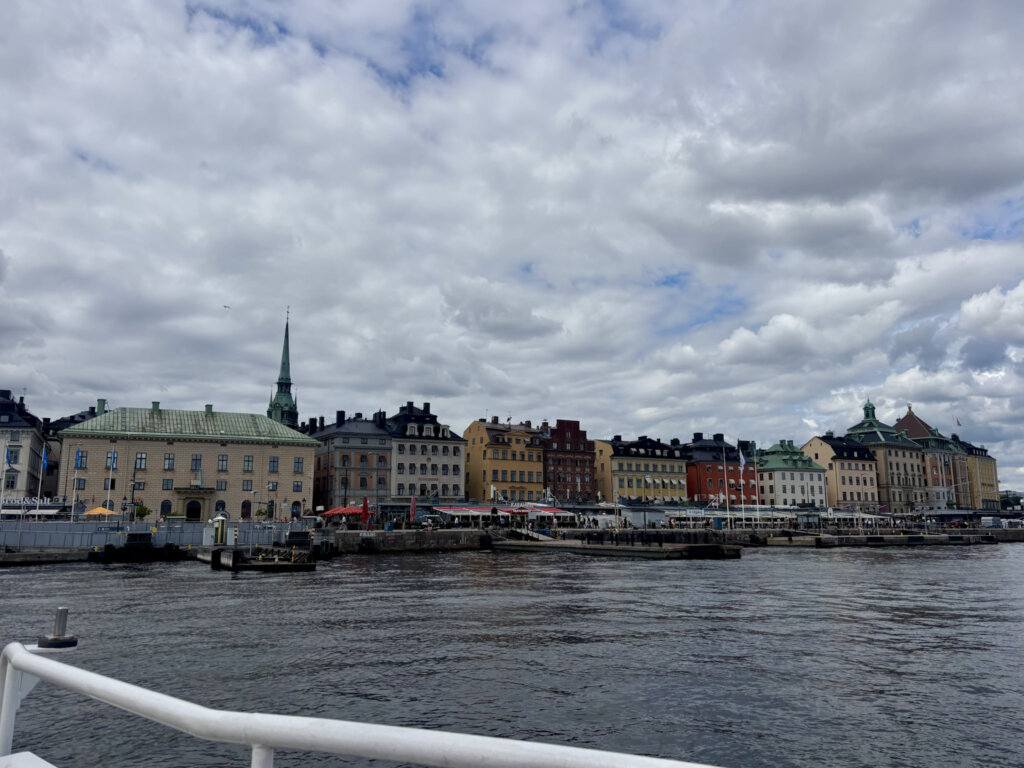
If you’d told me a year ago that navigating a train station would be one of the more formative moments of my study abroad experience, I would’ve told you I wasn’t even planning on going abroad, something that at the time felt so overwhelming and unneeded in my life. But in Stockholm, faced with signage I couldn’t read forced me to slow down, ask for help, point at maps, and trust strangers to point me in the right direction. Something that seems small, and essentially easy with our phones and the resources we have today, was something that became a formative experience, in that Stockholm became a home in that I had to work for it a bit, something I had to get used to, which made it mean so much more. There’s a specific vulnerability in not being able to rely on language; you have to pay closer attention to tone, gesture, and patience, both other people’s and your own. I came out the other side a little more confident that I can figure things out even when I don’t have all the tools I’m used to.
Cultural learnings: Fika and the art of quiet
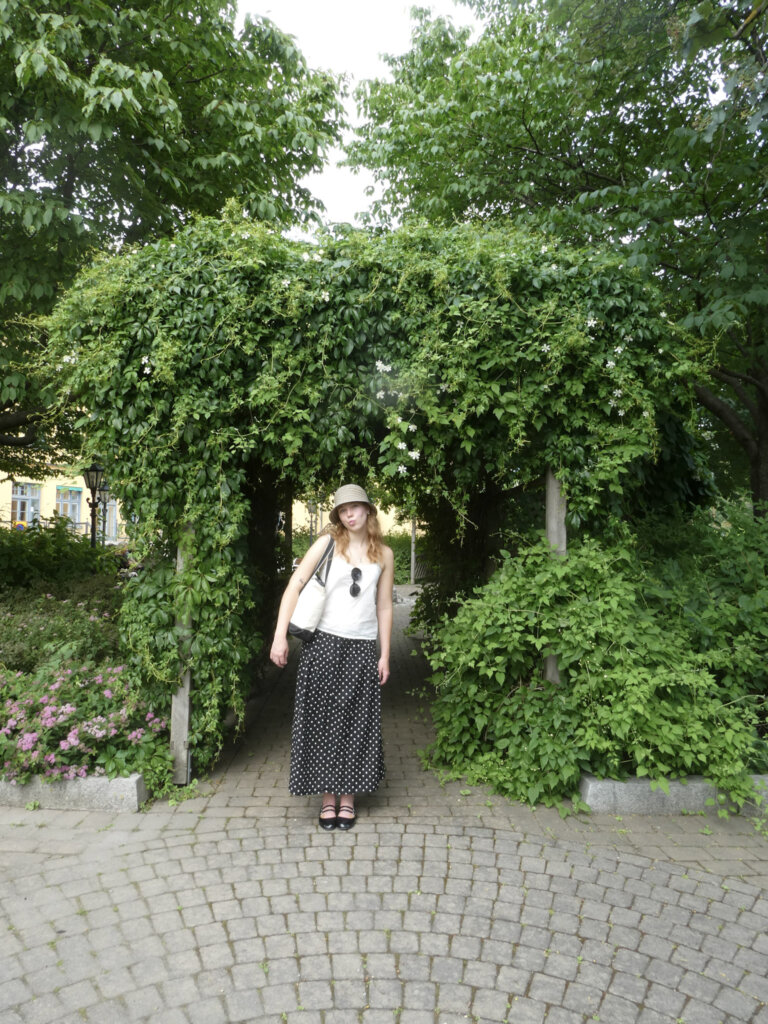
Fika is the daily ritual of pausing for coffee and something sweet, always with other people, and it became one of my favorite parts of the week. You never ever say no when someone asks you to Fika, it is not really about the coffee. It’s about forming a community that’s sometimes missing in the US, where we’re so divided. There was an emphasis on letting go of life’s negative aspects and truly enjoying others’ company. This is definitely the main thing I’ve started looking for ways to bring a version of that home with me. The other lesson was that Swedish culture doesn’t prize loudness the way I was used to. Being boisterous or performing for a room isn’t the norm here, and they remain comfortable in silence. At first, this felt unfamiliar, but over time, I found myself relaxing into it because it was refreshing to be in a community that can sit with itself instead of trying to fill silence.

What was actually hard
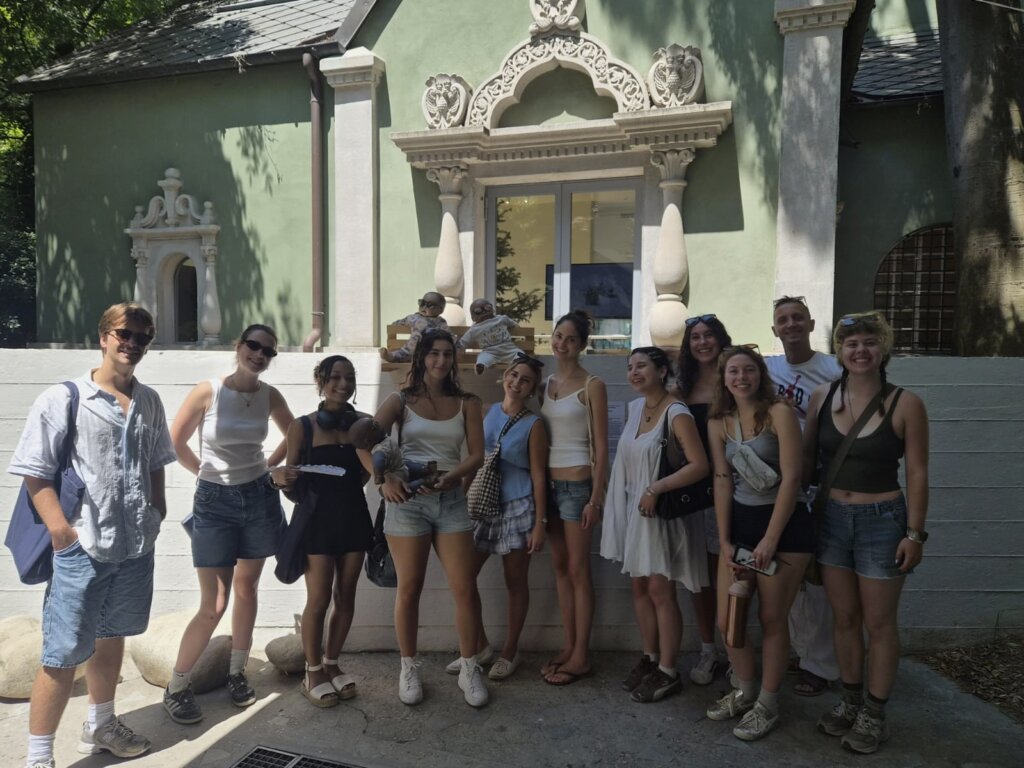
Something I honestly did not enjoy at first was traveling to Venice as a full class, it was a real challenge for me. I’m used to traveling on my own terms, at my own pace, my own schedule, my own moments to process what I’m seeing. Suddenly, I was moving through a foreign city with twelve other people, coordinating schedules, waiting for the group, and constantly adjusting my expectations. I won’t pretend that the shift was easy, but this trip became so much more than a short time to study world-renowned art. Somewhere between the water-bus rides and the late-night debriefs about what we’d seen that day, the group stopped feeling like a logistical challenge and started feeling like a real family. We saw every exhibition together, disagreed about what we liked, and looked out for each other in a new city. We planned extra dinners, explored Venice, and survived the heat together. I didn’t expect a class trip to teach me something about community, but it showed that shared experience, even if inconvenient, can turn strangers into family. By the end of the trip, those were the people I wanted to continue spending time with, going out to Jazz nights and having a good-bye dinner together, Venice creating unity more than anything.
If you’re considering this course (or this kind of trip)
A few things I wish I’d known going in:
● Let go of your usual travel rhythm. If you’re someone who likes to travel independently, group trips will stretch you, and that stretching is part of the point.
● Lean into fika, literally and figuratively. Find the version of “pausing on purpose” that works for you, whether it’s reading with people in the park, going on a group walk, or the traditional coffee shop and cardamom buns.
● Give the group experience a real chance; the parts that feel inconvenient at first are often where the real connection happens.
I came to Stockholm to study curating. I’m leaving with a much better understanding of what it means to build not only an exhibit or a room, but a community, a home away from home, that people actually want to be part of.